Every chamber director has the same line item that never quite grows fast enough: non-dues revenue. Sponsorships plateau. The golf outing nets what it netted last year. And raising dues is the one lever nobody wants to pull. So here is a quieter play a growing number of chambers are running — turning a workplace-culture program into a recurring revenue line that members are genuinely glad to pay for.
The problem every chamber already knows
Dues typically cover a fraction of what it costs to run a modern chamber. Everything else — events, advocacy, staff, the building — leans on non-dues revenue. The trouble is that most non-dues revenue is episodic: a sponsorship here, a ticketed event there, each one requiring fresh hustle. What chambers rarely have is a recurring, low-effort program that compounds year over year.
Meanwhile, your members — the small and mid-sized businesses that make up most rosters — are quietly struggling with something enterprise HR software was never priced to help them with: understanding and improving their own workplace culture. Culture Amp and 15Five start in the tens of thousands of dollars a year. A 40-person accounting firm or a family HVAC company simply isn't going to buy that.
That gap is the opportunity.
A member benefit that pays for itself
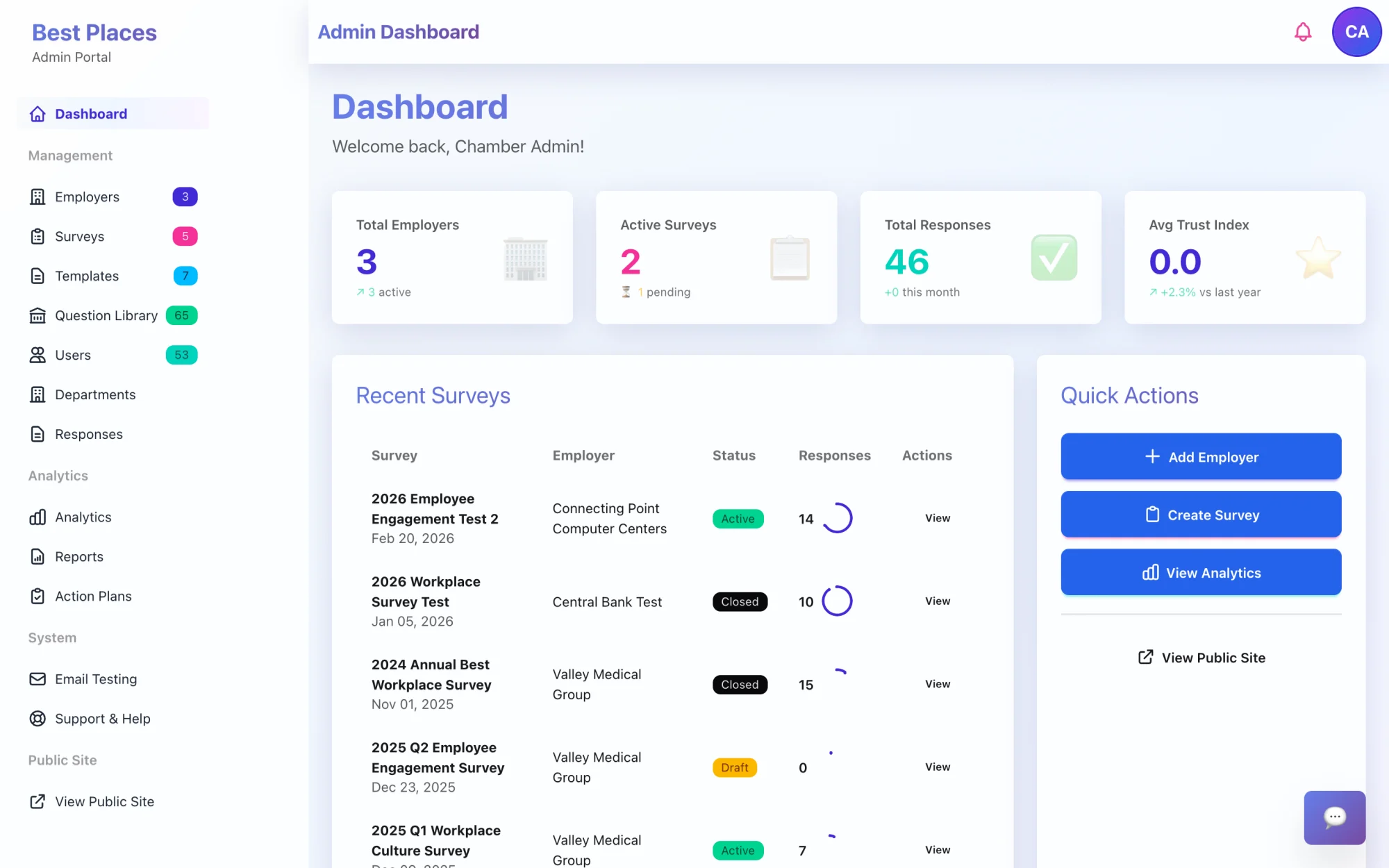
Chamber Culture is a white-label employee-survey and Best Workplace certification platform. The chamber licenses it for a flat $7,500/year — unlimited member businesses, unlimited employees surveyed — and it runs under your chamber's name and logo, not ours. From the member's side, it looks and feels like a program their chamber built for them.

The economics are refreshingly simple because the platform cost is fixed. You pay one flat fee no matter how many members participate, which means the model gets more profitable as adoption grows — the opposite of per-seat software.
Illustrative only: a chamber that offers the program to members at, say, $299/business/year breaks even at roughly 25 participating members. Everything past that is margin — on a benefit that also deepens retention. Your actual pricing and packaging are entirely yours to set.
Some chambers bundle it into a premium membership tier. Some sell it à la carte. Some give it away to anchor members and use it as a retention magnet. Because it's white-labeled and flat-priced, the packaging decision is yours — and you keep 100% of what you charge.
Why culture, specifically
Plenty of things could be a member benefit. Culture measurement is a particularly good one because it hits three notes at once. It's valuable — turnover is the single most expensive problem a small business quietly bleeds money on. It's sticky — a survey program becomes part of a member's annual rhythm, so it renews. And it's visible — a "Best Workplace" certification your chamber awards gives members something to put on their careers page and in their front window, which markets your chamber every time someone sees it.
The certification piece matters more than it looks. When a member earns Silver, Gold, or Platinum on the Chamber Culture Index, that badge carries your chamber's name. It's earned recognition, not a pay-to-play sticker — and it turns your members into a marketing channel for the chamber itself.
Running it without adding staff
The fair objection is staffing: chambers are lean, and nobody has a spare afternoon to babysit software. This is the part that makes the model actually work — the heavy lifting is automated. Surveys send themselves on a schedule, reminders go out automatically, and the AI writes the analysis and the action plan for each business so your team isn't interpreting spreadsheets. We cover onboarding a new member business in about a day.
If your chamber also runs its membership on the Chamber Culture CRM, the two share one login and one member record — so billing the program alongside dues, and seeing which members are engaged, happens in the same place you already work. That's optional, but it's where the model gets genuinely effortless.
Non-dues revenue doesn't have to mean another event to plan. Sometimes it's a program you switch on once, brand as your own, and let compound.


