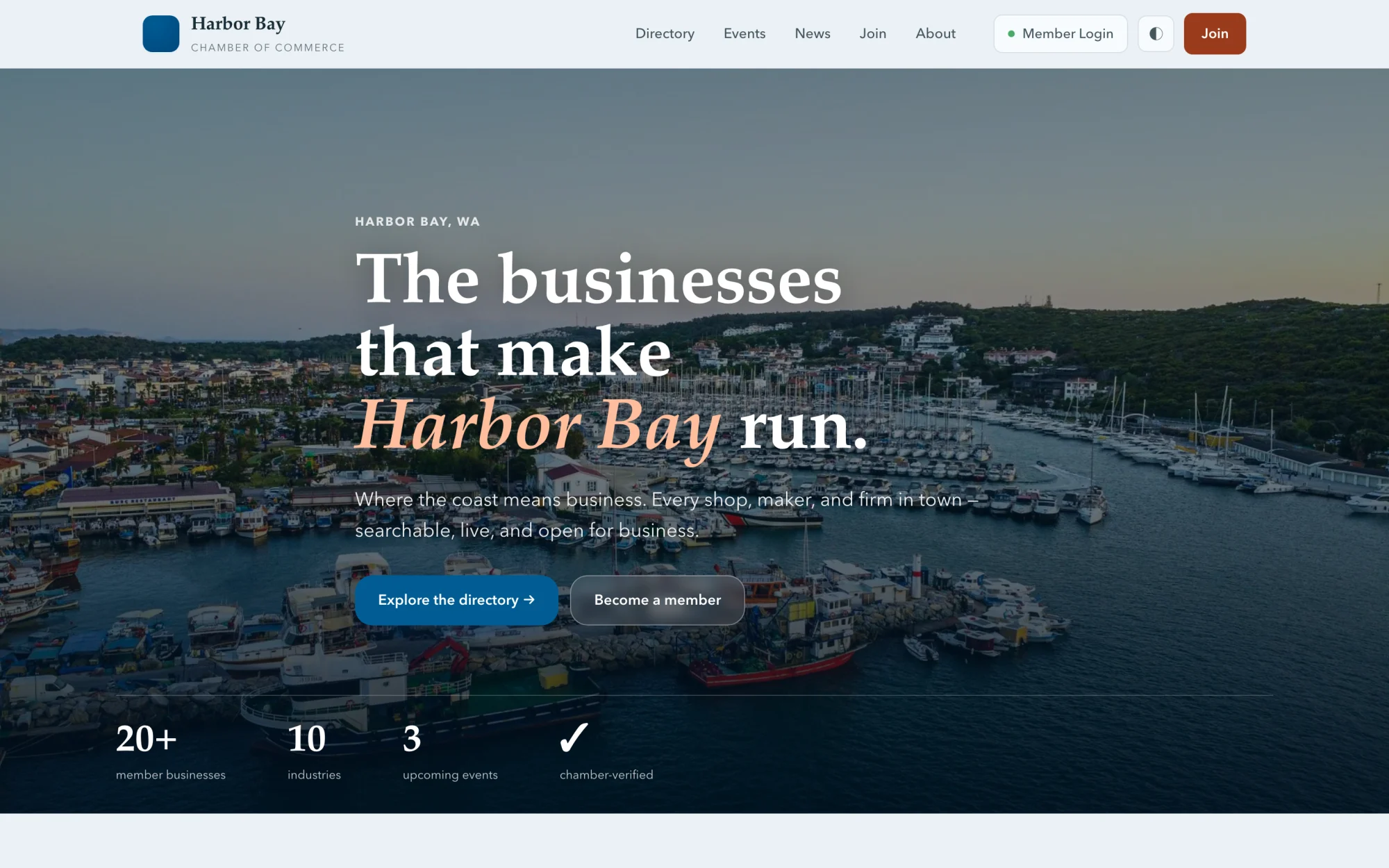
Ask a chamber when they last updated their website and you'll often get a wince. For most, the site is a brochure — built once, admired briefly, then slowly abandoned as the "current events" page fills with things from two years ago. That's a shame, because a chamber's website is potentially the busiest, most useful thing it owns. Here's what changes when it earns its keep.
The brochure trap
A brochure website has a fatal flaw: it's static in a world that isn't. The moment it launches, it starts drifting out of date — a member moves, an event passes, a phone number changes — and because updating it is a chore that requires a webmaster, nobody does it. Six months later the site is quietly lying to everyone who visits, and the chamber has trained its own members and community to ignore it.
The tragedy is that the website is often the first thing a prospective member, a visiting business, or a resident sees. It's your storefront, and it's showing last season's window display.

What a working chamber site actually does
The difference between a brochure and an asset is that an asset does a job every day. A chamber site that earns its keep:
- Sends business to members. A searchable, current directory turns "who does X in town?" searches into referrals for your members — the single most tangible benefit of membership.
- Fills your events. A real events calendar that anyone can find (and that shows up in search) does more for attendance than another email blast.
- Markets membership on autopilot. A "join" path that's always current and always visible is a recruiter that works nights and weekends.
- Makes members look good. When a member's listing is polished and findable, they get value from the chamber every time someone discovers them — whether or not they ever open your newsletter.
The bar is higher than it used to be
Ten years ago a chamber website could get away with being a bulletin board. Today your members run businesses with sharp websites, and they judge yours by that standard. A slow, dated, hard-to-search site doesn't just underperform — it subtly undercuts the chamber's authority as a champion of local business. If you're telling members to modernize, your storefront has to look the part.
Every other channel needs you to push. A good site pulls: people come looking for a business, an event, a way to join — and find it.
The fix isn't "redesign," it's "make it live"
The instinct is to commission a redesign every few years. But a prettier brochure is still a brochure. The real fix is a site that's connected to your data — where the directory updates itself from your member records, events publish themselves, and members maintain their own listings. That's the difference between a page that decays and one that stays true on its own. The heart of it is the directory, which deserves its own post: the living directory.
Your website is the one asset that's on duty every hour of every day. It's worth making it the best employee you have.
The site pictured above is a real Chamber Culture Sites member website — a premium chamber site with a directory that updates itself from live member data.


