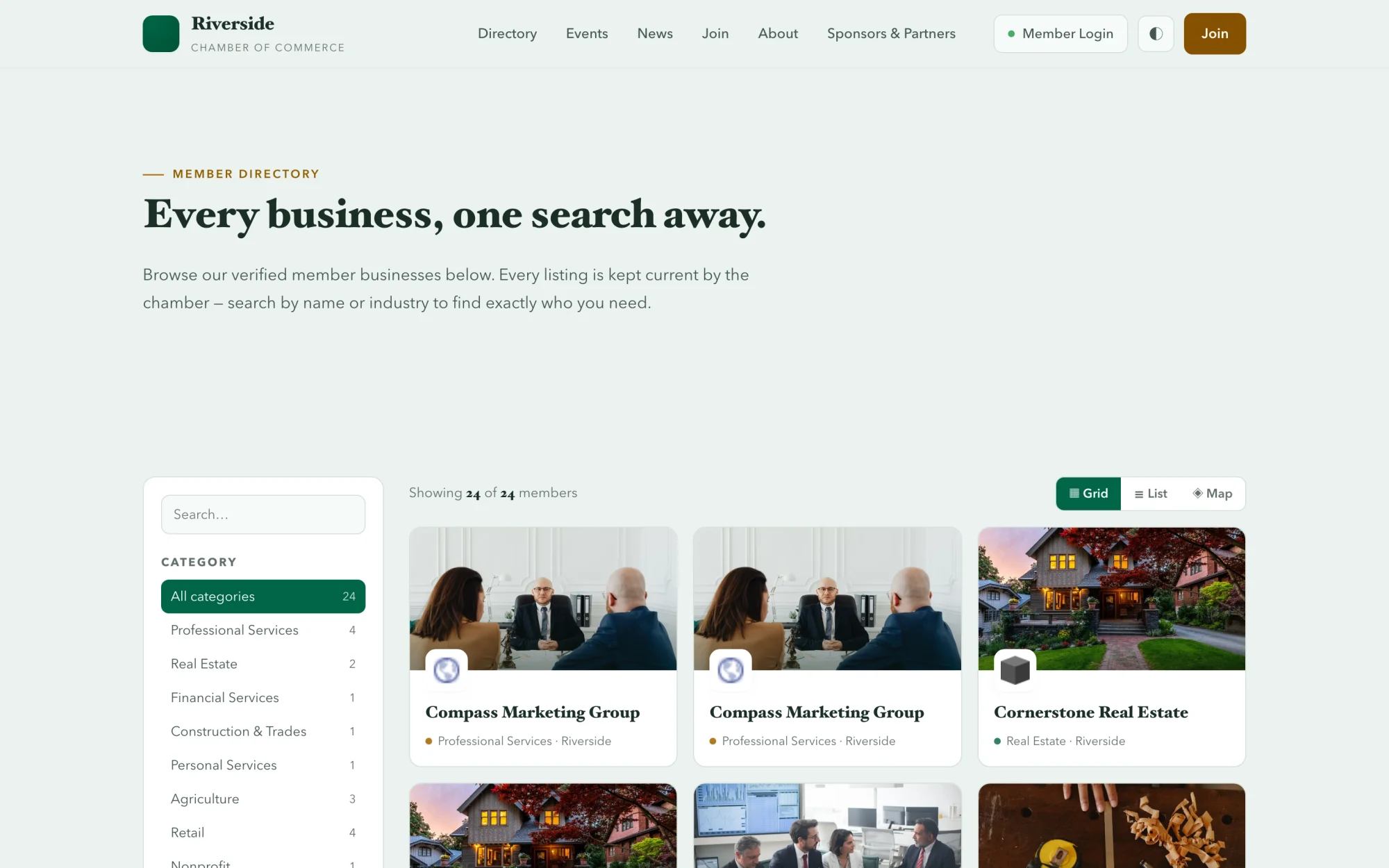
A member directory that's out of date is worse than no directory at all. Send someone to a disconnected phone number or a business that closed last spring and you haven't just failed to help — you've spent a little of your credibility, and the member's. The member directory should be the liveliest, most-visited, most-valuable page on a chamber's website. Here's why, and what "living" actually means.
Why directories decay
The traditional chamber directory is a static list someone typed once and now dreads maintaining. Businesses move, rebrand, change hours, and drop off — and every one of those changes is a manual edit that only happens if a staffer notices and finds the time. They don't, so the list slowly fills with ghosts. Eventually people learn not to trust it, and a directory nobody trusts is a directory nobody uses.
That's a real loss, because the directory is where a chamber delivers its most concrete promise: we will send you business.

What makes a directory "living"
A living directory isn't just a prettier list. It's one that maintains itself and does real work:
- It updates itself. Listings are driven by your member records, so when a member updates their profile — or their membership lapses — the directory reflects it without anyone touching the website.
- It's genuinely searchable. Search by name, filter by category, view on a map. "Who does X near me?" gets an instant, correct answer.
- It's built for a phone. Most of these searches happen on mobile, in the moment someone needs a plumber or a caterer. If it isn't fast and thumb-friendly, it doesn't get used.
- It works for search engines. A well-structured directory helps members show up in Google — a backlink and a discovery channel that compounds over time.
The moment keeping the directory current depends on manual edits, it starts to rot. Automatic is the only version that stays true.
The directory as a membership argument
Here's the strategic part. When a member can point to their listing, watch referrals come through it, and see themselves ranking in local search because of it, the value of membership becomes visible. You're no longer explaining the benefit in a renewal letter — the member is living it. A living directory quietly answers the hardest question in membership: "what am I actually getting for this?"
It also reinforces the whole website. As we argued in why your website is your most underused asset, a site earns its keep by doing a daily job. The directory is that job, done in public, for every member at once.
Make the directory live, and it stops being a maintenance chore and starts being the best argument for joining your chamber.
The directory shown here is a live Chamber Culture Sites directory, updating itself from real member data.


